Showing posts with label japanese cuisine. Show all posts

Friday, March 17, 2017

the fascinating world of niboshi

You can hardly discuss Japanese cuisine without mentioning niboshi, the dried baby sardines used in making one of the most common varieties of dashi, the ubiquitous soup stock that flavors such a great variety of Japanese foods.

Here's a Wikipedia link, but if you just google niboshi (also called iriko), you'll find so much more information than Wiki offers about this little package of big flavor.

Even so, I wouldn't have been inspired to paint an etegami of these bone-dry, misshapen creatures if I hadn't met someone on Instagram who lives and breathes niboshi.

When I say she lives and breathes niboshi, I mean she's stuck in a room full of them all day, every day. It turns out that she married into a family that produces kanbutsu, a catch-all term that means dried foods used in traditional Japanese cooking, such as vegetables, seaweed, noodles, and fish. I get the impression that the main product her family business deals with is niboshi. For seventeen years she has sorted  thousands of these dried fish each day, picking out the occasional rock or wrong sort of fish that gets overlooked during the several stages of preparing these things for the market.
a typical bag of niboshi

As is true of so many businesses that produce traditional products, the customer base of my friend's company has aged and dwindled without being successfully replaced by the next generation-- a generation that prefers Western food culture. Other companies in the same boat have tried attracting younger customers by developing westernized versions of niboshi recipes and printing them on the backs of their packages. But cooking is not a talent my friend feels she has. Alas.

So. What can she do to help out the family business? She thought about all the funny-looking fish and other odd things she comes across while sorting niboshi every day, and it occurred to her that people might get a kick out of seeing pictures of them on Instagram. At least it would help publicize this traditional food product to those who are unfamiliar with it.

That's how her Niboshi Monster photos were born. She finds fish babies -- not just sardines but other sea creatures that get mixed in and have to be sorted out-- and she arranges them into scenes that tell a story. I'm totally hooked on them, and eagerly await each new photo.

The best I can do is share the following photos-of-her-photos, but you can see them much better if you click here to go to her page on Instagram.

baby sardines attack baby perch of some sort (Apogon semilineatus)


baby perch of some sort (Apogon lineatus?) blowing fish eyeball "bubbles"

baby barracuda with fish eyeball "pearls" on scallop shell


Saturday, January 7, 2017

let them eat grass


It's customary in Japan to eat a rice porridge called nanakusa-gayu (literal translation: seven-grass rice porridge) on January 7th, the Festival of Seven Herbs. You can find a chart that lists which seven "grasses" (herbs) go into the porridge at this Wikipedia link, which also explains that "The seventh of the first month has been an important Japanese festival since ancient times. The custom of eating nanakusa-gayu on this day, to bring longevity and health, developed in Japan from a similar ancient Chinese custom, intended to ward off evil. Since there is little green at that time of the year, the young green herbs bring color to the table and eating them suits the spirit of the New Year."

Yesterday it became clear that my husband had come down with a serious chest cold, so I made a thin version of a smooth green vegetable soup I often make for him. And since it also happened to be the day of the Festival of Seven Herbs, I made a game out of including exactly seven green plants in the soup.  Specifically: spinach, shiso leaves, parsley, green onions, celery, broccoli, and iso-nori (a laver-like seaweed that grows on rocks), all blended into a base of chicken broth. It isn't seven-herbs rice porridge, but it's really quite tasty.

Thursday, April 2, 2015

stamps you'll want to lick


UPPERCASE magazine comes up with jillions of interesting art projects and calls-for-submission, but rarely do the calls overlap with my limited skills and not-so-limited interests to the extent that I go beyond just thinking of participating. 

This month, however, UPPERCASE has a couple of postage-stamp-related calls on offer---and you know how much I love artistic postage stamps. So, this time, I'm not just thinking about submitting, I'm actually thinking really hard. 

But all I have so far is a vague idea that celebrates the 2014 UNESCO decision to register traditional Japanese cuisine as an Intangible Cultural Heritage. Oops, I remembered to write in the country name, but I forgot to include a denomination (value) for the stamps..... Hmm, must add it later or do it over.

The call description says:
Design or Illustrate your ideal postage stamp! What would be the perfect topic? What style? Typographic or illustrative? Vintage-inspired or modern? What country (real or imagined)?

Whether I end up submitting work or not, it will be very cool to see what other people create for this call. If you'd like to submit a design of your own, read the submission details (size, deadline, how to submit, etc) at this link. 


PS: don't let my photo confuse you; submit your stamp design in the correct dimensions and without perforations.

Wednesday, March 19, 2014

cultural heritage series


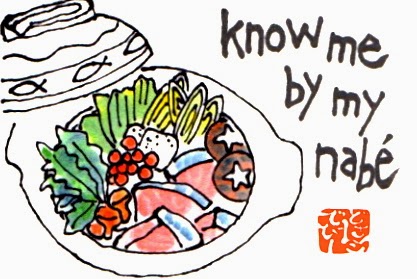
UNESCO recently registered “Japanese Cuisine” as an intangible cultural heritage of the world. To commemorate this event, I did a series of etegami depicting dishes that I felt expressed the connection between Japan’s food and cultural identity.

The first illustration depicts a box having lots of compartments filled with a wide variety of tidbits generally called Osechi, which is the label given to food prepared especially for New Year’s Day. Each item has some kind of auspicious meaning, often based on wordplay, although sometimes the significance is in the shape or color of the item.


The second illustration depicts Ishikari Nabe, a hot-pot dish that represents Hokkaido, the part of Japan I call home. This Ishikari Nabe features sea food and agricultural produce for which Hokkaido is known (particularly salmon and salmon eggs). Many regions of Japan are represented by their own particular nabe recipe.

I used a black felt pen instead of the traditional fude writing brush and sumi ink for these, so they don't look much like traditional etegami.


Sunday, January 5, 2014

etegami call for artists who love japanese cuisine

a box of osechi (new year food)
THE CHARM OF JAPANESE CUISINE-- EXPRESSED IN ETEGAMI. SPONSORED BY THE MINISTRY OF AGRICULTURE, FORESTRY, AND FISHERIES, IN CELEBRATION OF THE UNESCO DECISION TO REGISTER JAPANESE CUISINE AS AN INTANGIBLE CULTURAL HERITAGE OF THE WORLD.
ETEGAMI SIZE: 10 cm x 15 cm (approx 4 inches x 6 inches)
THEME: EXPRESS THE CHARMS OF JAPANESE CUISINE FOR FUTURE GENERATIONS 
AS THERE IS PAPERWORK INVOLVED WITH THIS CALL, I WILL BE ORGANIZING SUBMISSIONS FROM OUR GROUP AND WILL SUBMIT ALL WORKS ON BEHALF OF THE ETEGAMI FUN CLUB IN ONE LARGE ENVELOPE. YOUR NAME AND COUNTRY WILL BE WRITTEN ON THE DOCUMENTS, AND IF YOU RECEIVE AN AWARD, I WILL NOTIFY YOU AND SEND THE AWARD TO YOU AT MY OWN EXPENSE.
I recommend your sending your submission to me in an envelope, with your name and address written on both the envelope and the back of your etegami.

TO BE INCLUDED IN OUR GROUP SUBMISSION, YOUR WORK MUST REACH ME BY FEBRUARY 1. 2014. THE WORKS WILL BE "JUDGED" IN TOKYO BEFORE THE END OF FEBRUARY, AND THERE WILL BE AN AWARDS CEREMONY IN MID-MARCH. AS USUAL, THE WORKS WILL NOT BE RETURNED. SEND YOUR SUBMISSION TO ME AT :

DOSANKODEBBIE,
HIRAGISHI 2-11-1-22,
TOYOHIRA-KU,
SAPPORO 062-0932, JAPAN

If you live in Japan and would rather participate in the call directly, go to this LINK (in JAPANESE) EXPLAINING THIS ETEGAMI CALL: http://www.wa-shoku.co.jp/form.php