"O snail. Climb Mt. Fuji. But slowly, slowly." (Kobayashi Issa, 1763 - 1827)
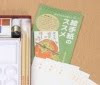
Last month, I came across an old sales catalog for etegami supplies that I had saved for the sake of the back cover. It was printed with a list labeled "The Seven Marks of Etegami," which I have translated below.
1. Awkwardness in etegami is fine-- even desirable.
2. Observe your subject closely and draw boldly.
3. Don't make an under-drawing. Your etegami should be a spontaneous, one-shot deal.
4. Use an ink brush and sumi ink.
5. When making your lines, move the ink brush across the paper very, very slowly.
6. Put your heart into the selection and writing of the accompanying words.
7. When the etegami is done, address it, stamp it, and stick it in the mailbox.
Unlike a lot of traditional Japanese Art, etegami has very few hard and fast rules. But it is founded on some basic principles. These principles have been expressed as guidelines by different etegami masters in different ways, and I've posted them on this blog from time to time. Compare the list above with the one in this post.
If you are familiar with my work, or that of other etegami artists, you've probably seen plenty of etegami that seem to bend or ignore these guidelines. In fact, I frequently experiment with different writing utensils or inks, and I often make etegami collages for a change in routine. When I ask for submissions to an etegami call, the only thing I am inflexible about is that the submissions must be a combination of image and words, and that they be in an easy-to-mail form. After all, the name of this art form is E (picture/image) + Tegami (letter/missive).
 But I do think it is important to know what the early leaders and formers of etegami had in mind, and what they thought made etegami different from other forms of popular art. If you have been producing etegami without understanding this, you may want to take the time to digest the guidelines. See if it makes a difference in the way you paint, and in how you express yourself in this medium.


 Posts
Posts